Is AI learning enough from Africa?
What happens to communities whose languages, histories, and cultures are not adequately represented in the data used to develop AI?
- AUTHOR
- Sammy Kori
- DATE
- August 20, 2023
- READ TIME
- 3 min

Introduction
Can AI quietly erode the cultures it was never designed to understand?
I was reading the NIST AI Risk Management Framework, specifically the section on fairness, and something caught my attention.
NIST identifies three major categories of AI bias: systemic, computational and statistical, and human-cognitive. What struck me was the recognition that bias can exist even without prejudice, discriminatory intent, or anyone deliberately trying to cause harm.
It made me think about something beyond the usual conversations around AI fairness.
What happens to cultures, languages, and communities that have little influence over how AI is developed?
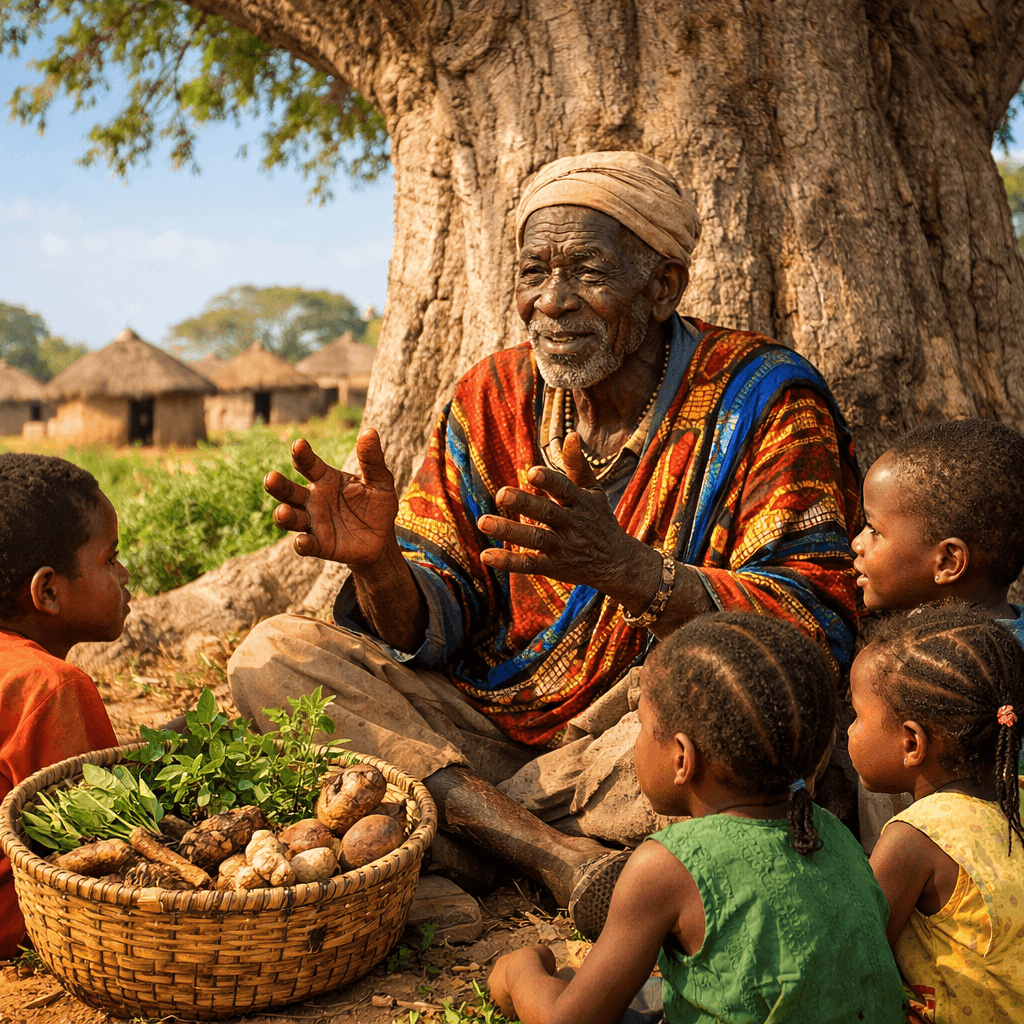
Consider how we interact with AI today. We ask it questions, seek advice, learn new skills, create content, and increasingly rely on it to help us make decisions.
But AI systems learn from data. If certain languages, cultural perspectives, histories, and ways of understanding the world are poorly represented in that data, what happens when people begin relying on these systems as a source of knowledge?
Could the answers we receive gradually make some perspectives more visible, more accessible, and more influential than others?
Could a child who grows up learning primarily through AI become more familiar with the cultural references and worldviews embedded in these systems than with the traditions of their own community?
And could people eventually abandon their native languages, not because they no longer value them, but because the technology they depend on works better in another language?
These are questions I don't think we should dismiss.
The concern isn't that AI will inevitably destroy cultural identity. AI could also help document endangered languages, preserve oral histories, make local knowledge accessible, and connect younger generations with their heritage.
The question is who gets to shape that future, and whose knowledge gets carried into it?
This is where I think AI governance needs to go beyond testing models for accuracy, measuring demographic fairness, or checking whether a system produces harmful outputs.
We should also ask:
- Representation: Whose languages, histories, and perspectives are included in the data used to build AI?
- Participation: Are the communities represented by that data involved in decisions about how it is collected, used, and governed?
- Cultural preservation: Are we building systems that help communities sustain their identities, or systems that make assimilation into dominant languages and worldviews the path of least resistance?
- Accountability: Who is responsible when the cumulative effects of AI adoption contribute to the marginalisation of a language or cultural perspective?
I am particularly interested in the position of smaller communities and societies that have limited resources to participate in AI research and development. They may have little influence over the systems that increasingly mediate access to information, education, and economic opportunity.
Yet they will still have to live with the consequences.
For me, this is an important dimension of responsible AI: fairness isn't just about how an AI system treats the people who use it. It's also about whose knowledge, language, and identity the system helps preserve, and whose it risks leaving behind.
As AI becomes more deeply embedded in everyday life, perhaps one of the questions we should be asking is not simply whether AI works for everyone, but whether everyone has a meaningful role in shaping what AI becomes.
I'd be interested to hear other perspectives, particularly from people working in AI governance, language technology, and cultural preservation.
How should we govern AI to ensure that technological progress doesn't come at the expense of cultural diversity?
Share your thoughts
If you found value in this post, consider sharing it with others or leaving a comment below. It comes straight to my inbox, and your feedback fuels my passion for creating meaningful content.